

Restaurant plumbing problems often start with slow drains, grease buildup, leaking fixtures, or weak hot water. The safest answer is early action: protect the area, stop adding water, check simple causes, and call a licensed commercial plumber when food safety, sewage, gas, or main lines are involved. This guide explains what to watch for and when to act.
A restaurant needs steady water flow and safe drainage each day. One blocked sink can slow food work. One sewer backup can close part of the building. Good care helps owners, managers, tenants, and property investors avoid larger damage in Stockton.
Table of Contents
- What Are the Most Common Restaurant Plumbing Problems?
- How Does Grease Cause Restaurant Drain and Sewer Problems?
- How Should Restaurants Handle Blocked Drains and Slow Fixtures?
- Why Do Restaurant Restrooms Develop Plumbing Issues?
- Why Is Hot Water Important for Restaurant Plumbing?
- How Can Restaurants Prevent Plumbing Emergencies?
- When Should a Restaurant Call a Licensed Commercial Plumber?
- Frequently Asked Questions
What Are the Most Common Restaurant Plumbing Problems?
Common problems include grease-clogged drains, blocked sinks, sewer backups, leaking pipes, running toilets, weak water pressure, and hot-water failures. These issues can affect kitchens, restrooms, storage rooms, dining areas, and the main sewer connection.
Restaurant plumbing is one connected system. Supply pipes bring clean water to sinks, dishwashers, toilets, and water heaters. Drain pipes carry used water away. Vent pipes let air move through the drains. Grease interceptors or traps catch fats, oils, and grease before they reach the sewer.
When one part fails, other parts may show signs. A slow kitchen sink may point to buildup close by. A restroom floor drain may overflow when the main drain is blocked. Low hot-water flow may come from a weak heater, a closed valve, or a blocked supply line.
Common restaurant plumbing problems include:
- Slow or blocked hand sinks and prep sinks
- Grease interceptor overflow or poor flow
- Dishwasher drain problems
- Toilets that run, clog, or overflow
- Floor drains with foul smells or standing water
- Leaking supply lines, faucets, or water heaters
- Sewer backups in kitchens or restrooms
Some issues need quick action. Sewage, a burst pipe, a gas smell, or a major leak can threaten health and property. Staff should keep people away, stop nearby water use, and follow the site emergency plan. Simple checks are safe only when they do not involve sewage, electrical parts, gas, pressure, or hidden pipes.
Stockton California Plumbing helps restaurant owners in Stockton understand whether a blocked drain needs routine cleaning or urgent repair. Building age, pipe materials, local conditions, and the property layout can all affect the right answer.
How do kitchen, restroom, and utility plumbing systems work together?
Kitchen drains handle food waste, grease, and heavy water use. Restroom drains handle waste, paper, soap, and customer traffic. Utility plumbing supports dishwashers, mop sinks, ice machines, and water heaters. These systems may use separate branches, but they often join the same main sewer line.
Which plumbing issues require immediate attention?
Sewage, flooding, a burst pipe, unsafe water, or a gas leak needs prompt professional help. A small faucet drip is less urgent, but it still needs repair if it may damage walls or floors. Managers should note the location and symptoms before help arrives.
How Does Grease Cause Restaurant Drain and Sewer Problems?
Grease causes trouble when fats, oils, and grease cool inside pipes. The material sticks to pipe walls and catches food scraps, soap, and other waste. The opening then grows smaller, so water moves more slowly.
Fats, oils, and grease are often called FOG. FOG is cooking waste that can harden inside drainage pipes. Pouring it into a sink can cause a blockage inside the restaurant or farther down the sewer line.
Warm water does not remove the problem. It may carry grease farther down the pipe before it cools again. Chemical drain cleaners can harm some pipes and workers. They may also leave the main buildup behind. They should not replace proper drain cleaning or grease control.
Every restaurant needs a clear grease plan. Staff should scrape plates into waste containers. Used cooking oil should go into approved collection containers. Sink strainers should stay in place and be cleaned often. Grease interceptors need inspection and service based on use and local rules.
Warning signs of a grease-related clog include:
- A kitchen sink that drains slowly after busy service
- A sour or rancid smell near sinks or floor drains
- Gurgling sounds from nearby pipes
- Water that rises in another fixture when a sink runs
- Repeated blockages after short periods of normal use
- Grease or dirty water around an interceptor
One slow drain may involve a nearby branch line. Several slow drains may show a larger blockage. If wastewater appears in a floor drain, staff should limit water use and close the area until the cause is known.
Restaurants in Stockton may need different grease plans based on kitchen size, building type, and sewer layout. Stockton California Plumbing can help find out whether the cause is grease, a full interceptor, a damaged pipe, or a deeper sewer issue.
Why do fats, oils, and grease create recurring blockages?
Recurring blockages often mean the source has not been controlled. Cleaning one pipe section may restore flow for a short time, but grease can return if waste enters the sinks or the interceptor is not maintained. A lasting plan joins good staff habits, proper equipment, inspections, and professional cleaning.
What are the warning signs of a grease-related clog?
Slow flow, bad smells, gurgling, standing water, and repeat backups are common signs. A blockage during busy meal times may mean the pipe has too little open space. Managers should not wait for a full backup before arranging an assessment.
How Should Restaurants Handle Blocked Drains and Slow Fixtures?
Restaurants should first stop using the fixture and protect nearby food, equipment, and floors. Staff can remove visible debris from a drain strainer, check a visible shutoff valve, and clean a removable trap when the work is safe and sanitary. They should not open a sewage line or use harsh chemicals as a first step.
Commercial drain cleaning depends on the blockage and its location. A plumber may use mechanical tools, a drain camera, or water pressure cleaning when the pipe can handle it. A camera inspection uses a small camera to view the inside of a drain. It can help find cracks, roots, breaks, or heavy buildup.
The right method depends on pipe material, line size, access, and the waste inside. A kitchen branch with grease needs a different method from a main sewer with roots or a collapsed section. Good cleaning should restore flow without harming old or weak pipes.
A blocked drain response should include these steps:
- Stop using the sink, toilet, dishwasher, or nearby fixture.
- Keep food, staff, and customers away from dirty water.
- Move supplies and equipment away from possible water damage.
- Check only safe, visible parts for debris or loose connections.
- Record when the blockage began and which fixtures are affected.
- Arrange professional help when the blockage returns or spreads.
A repeat blockage is a warning, not just an annoyance. It may point to grease, poor pipe slope, tree roots, shifting soil, broken joints, or a damaged sewer lateral. Sewer line repair may be needed when cleaning does not provide lasting flow.
Which drain-cleaning methods are suitable for commercial kitchens?
The pipe and blockage decide the method. Mechanical cable cleaning can clear some obstructions. Water pressure cleaning may remove heavy residue from suitable lines. Camera inspection can find hidden trouble. A licensed plumber should choose the method after checking access, pipe condition, and possible damage.
When does a recurring blockage point to a damaged sewer line?
The sewer line may be involved when several fixtures back up, wastewater returns through floor drains, or cleaning helps only briefly. Soggy ground, outside odors, and repeated stoppages may also matter. These signs need a proper inspection instead of repeated attempts to clear the same symptom.
Why Do Restaurant Restrooms Develop Plumbing Issues?
Restaurant restrooms face heavy use, frequent cleaning, and misuse of toilets and sinks. Common issues include clogged toilets, running valves, leaking faucets, blocked floor drains, weak flushes, and damaged supply lines. A small fixture problem can grow when several restrooms share one branch line.
Toilets may clog when customers flush wipes, paper towels, packaging, or other items that do not break down like toilet paper. Staff should never flush cleaning cloths, gloves, or chemical containers. Restroom bins should be easy to find and emptied often.
A running toilet wastes water and may have a worn flapper, fill valve, float, or handle. A dripping faucet may have a worn washer, cartridge, loose connection, or damaged hose. These small repairs still matter because leaks can harm cabinets, walls, floors, and nearby electrical parts.
Floor drains need care too. A trap is the curved part of a drain that holds water and blocks sewer gases. If a floor drain dries out, smells may enter the room. If it is blocked, dirty water may remain and create a slip or sanitation risk.
Restroom checks can include:
- Looking for water around toilets and under sinks
- Testing flush handles and noting weak or delayed flushing
- Checking floor drains for standing water or foul odors
- Keeping paper products and wipes out of toilets
- Cleaning strainers without pushing debris into the drain
- Reporting repeat clogs instead of hiding the symptom
How does heavy customer use affect toilets, sinks, and floor drains?
Heavy use means more flushing, hand washing, soap, paper, and cleaning water. Fixtures may wear faster, especially when they are old or poorly adjusted. Regular checks help staff find leaks and weak flow before a busy service period turns a small fault into a closure.
What restroom problems may indicate a larger plumbing failure?
Several slow fixtures, bubbling toilets, dirty water in floor drains, or backups in more than one room may show a main drain issue. A foul smell that stays after cleaning may point to a dry trap, broken seal, or sewer gas problem. These signs need professional attention.
Why Is Hot Water Important for Restaurant Plumbing?
Hot water supports hand washing, dishwashing, surface cleaning, food preparation, and sanitation. A hot-water outage can stop kitchen work and create health concerns. Managers should follow their food safety plan and local rules when the system cannot provide suitable hot water.
Commercial hot-water systems may include storage tanks, tankless units, mixing valves, recirculation pumps, supply lines, and controls. A mixing valve blends hot and cold water to control delivery temperature. A recirculation system moves hot water through the building so fixtures receive it faster.
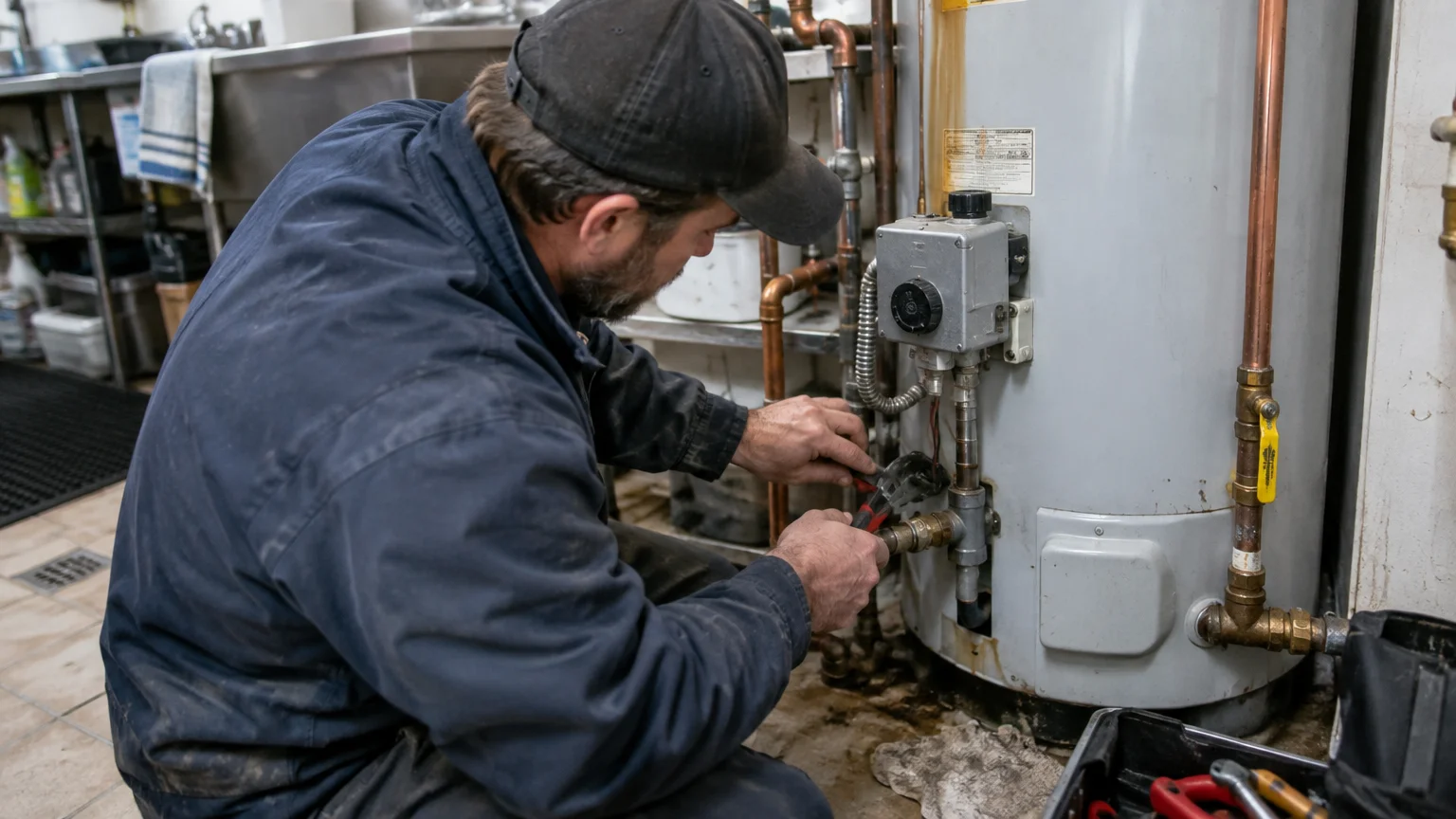
Common causes of hot-water trouble include a failed heating element, burner issue, faulty control, sediment, damaged valve, poor insulation, or a leaking tank. A heater may also shut down because of a safety control or supply problem. Staff should not bypass safety devices or open fuel-burning equipment.
A safe first check is to see whether the issue affects more than one fixture. Staff can look for a visible leak, check whether a valve was closed, and note an error message. Electrical panels, gas controls, and heater covers should be handled only by qualified professionals.
During an outage, managers can limit water use, protect food and clean equipment, and move needed work to approved areas if the site plan allows it. A water heater repair may restore service, but old equipment or damaged pipes may need a wider review.
What causes water heaters and commercial hot-water systems to fail?
Failures may come from worn parts, scale, sediment, leaks, poor controls, or lost fuel or power. The cause is not always visible outside the unit. A professional can test the system, check safety parts, and find whether the trouble is in the heater, pipes, valves, or controls.
How can restaurants reduce disruption during a hot-water outage?
Restaurants should stop tasks that need hot water, protect food and clean equipment, and follow their written response plan. Managers should record which fixtures work and whether cold water is also affected. Staff should never make unsafe repairs around gas, electricity, or hot water.
How Can Restaurants Prevent Plumbing Emergencies?
Restaurants can prevent many emergencies with daily checks, staff training, grease control, and planned maintenance. Prevention cannot remove every risk, but it can reveal small leaks, slow drains, and worn fixtures before they affect customers.
A commercial drain and grease plan should name who checks each area and what signs staff must report. It should explain how waste is handled and where shutoff valves are located. New staff need simple training on what belongs in sinks, toilets, floor drains, and waste containers.
Maintenance should match the building’s use. A busy kitchen may need more frequent checks than a lightly used break room. The plan should consider meal volume, grease production, pipe age, past blockages, interceptor design, and local rules.
A useful prevention plan includes:
- Daily checks for leaks, smells, slow flow, and standing water
- Proper collection of cooking oil and food waste
- Clean strainers in sinks and floor drains
- Clear access to water and gas shutoff controls
- Routine checks of toilets, faucets, hoses, and water heaters
- Written records of blockages, repairs, and repeat symptoms
Managers should also know how to find a water leak in the building. They can check meters when no water is being used, look for damp areas, and watch for pressure changes. Hidden leaks may appear as stains, soft floors, peeling paint, mold, or a steady sound behind a wall.
An inspection can find issues daily cleaning misses. Drain cleaning, sewer checks, leak detection, and water heater service may help protect the property. Stockton California Plumbing serves the main Stockton area, including Downtown, Brookside, Lincoln Village, Spanos Park, Weston Ranch, and nearby neighborhoods. The team can help property owners plan maintenance without guessing at the cause.
What should a commercial drain and grease management plan include?
It should cover waste handling, sink use, interceptor care, staff training, emergency shutoffs, inspection records, and response steps. The plan should also list warning signs and explain when staff must stop using a fixture. Clear duties make it easier to act before a small blockage becomes a sewer backup.
How often should restaurants schedule inspections and maintenance?
There is no single schedule for every restaurant. The right timing depends on use, pipe condition, grease volume, past repairs, and equipment. Daily staff checks should support professional inspections and cleaning based on the building’s needs and local rules.
When Should a Restaurant Call a Licensed Commercial Plumber?
A restaurant should call a licensed commercial plumber when sewage backs up, several fixtures fail, a pipe leaks inside a wall, a water heater stops working, or a blockage returns after basic cleaning. Professional help is also needed for gas lines, hidden leaks, main sewer lines, and work involving electrical or pressurized equipment.
A simple check is reasonable when staff can do it safely. They may remove visible debris from a strainer, tighten a loose faucet connection by hand, check a visible shutoff, or clean a removable trap under controlled conditions. They should stop when dirty water, strong odors, hidden pipes, electricity, gas, or structural damage is involved.
Urgency depends on the risk. A leak near electrical equipment, sewage in a food area, or a burst pipe needs immediate action. A slow hand sink may allow limited use for a short time, but the manager should arrange service before the issue spreads.
A plumber may inspect the fixture, test flow, check connected lines, and look for wider failure. The repair plan depends on access, pipe condition, the blockage source, and damage found. Plumbing costs can vary with parts, line size, access, damage, and urgency. The final cost should be confirmed on a quote before work begins.
Stockton California Plumbing can help restaurant owners and property managers decide which steps are safest. The team can address drain cleaning, blocked drains, sewer line repair, emergency plumbing, sink repair, and water heater repair when those services fit the problem.
How should a manager assess the urgency of a restaurant plumbing problem?
The manager should ask whether water is spreading, sewage is present, food or customers are at risk, or more than one fixture is affected. The manager should also consider gas, electricity, structural damage, and whether the business can operate safely. When unsure, water use should stop until the issue is checked.
Key takeaways for protecting kitchen, restroom, and sewer systems
- Keep fats, oils, grease, food waste, wipes, and paper towels out of drains.
- Treat slow flow, gurgling, odors, and standing water as early warnings.
- Use safe staff checks only for visible, low-risk problems.
- Arrange professional help for sewage, gas, hidden leaks, and repeat blockages.
- Keep maintenance records and train every staff member on drain care.
Conclusion
Restaurant plumbing works best when staff notice small changes early. Grease control, clean fixtures, safe hot water, and planned inspections can reduce service problems. Repeat clogs, sewer odors, leaks, and outages should not be treated as normal wear. Contact us to arrange help with restaurant plumbing problems from Stockton California Plumbing.
Frequently Asked Questions
What are the most common restaurant plumbing problems?
Grease-clogged drains, blocked sinks, sewer backups, leaking pipes, running toilets, weak water pressure, and hot-water failures are common. Kitchen drains often face grease and food waste. Restrooms face heavy use and improper items. Several problems at once may point to a main drain or sewer issue.
How can a restaurant prevent grease from blocking its drains?
Staff should scrape food into waste containers and collect cooking oil separately. Grease should not be poured into sinks, even with hot water. Sink strainers should stay clean, and grease interceptors need proper care. A written plan helps every worker follow the same steps during busy service.
How can someone find a plumbing leak in a restaurant?
Start by checking visible pipes, faucets, toilets, water heaters, ceilings, walls, and floors. Look for damp areas, stains, soft materials, mold, or a meter that moves when water is not being used. Hidden or major leaks need professional leak detection and prompt action.
What should staff do if a pipe bursts?
Staff should stop using nearby fixtures, close the safe local shutoff if they know its location, and keep people away from the water. They should protect food and equipment only when it is safe. If water reaches electrical equipment, staff should avoid the area and seek urgent professional help.
When does a restaurant need emergency drain cleaning?
Emergency drain cleaning may be needed when sewage backs up, several fixtures stop draining, dirty water enters a food area, or a blockage may close the business. A single slow sink may be less urgent, but repeat stoppages still need attention because they can signal a deeper sewer problem.
If you are unsure what is happening, arrange an inspection before the issue grows. A clear assessment can help protect the building, staff, customers, and daily service.
If you are not sure what you are dealing with, it is worth having someone look at it before it turns into a bigger job. Get in touch with Stockton California Plumbing in Stockton, California today and we will tell you where you stand.